GSTR 3B Format and Filing
GSTR-3B is a self-declared monthly GST return that summarizes your taxable sales, purchases, input tax credit, and tax payable. Regular filing helps maintain GST compliance while keeping your business audit ready.
GSTR-3B is a self-declared monthly GST return that summarizes your taxable sales, purchases, input tax credit, and tax payable. Regular filing helps maintain GST compliance while keeping your business audit ready.

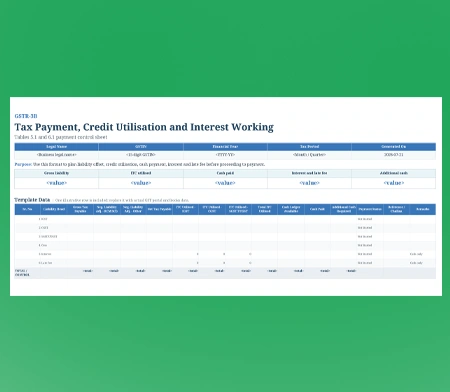
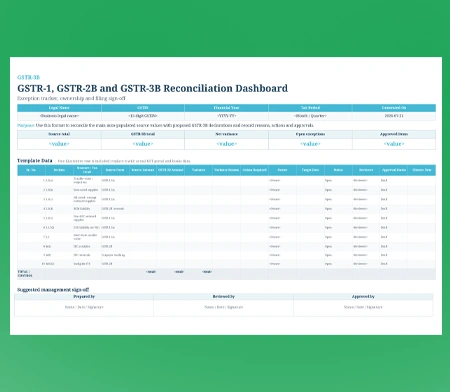
GSTR-3B is a mandatory monthly GST return that provides a summary of your business’s taxable sales, input tax credit, and tax liability. With Raseed billing software, you can automate calculations, minimize filing error, and prepare your GSTR-3B returns.
The software records qualified input tax credits and assists in reconciling ITC with purchase data. This lowers filing errors and enables businesses to take advantage of relevant tax advantages.
Built-in validation checks identify missing information, incorrect GSTINs, tax mismatches, and calculation errors before generating the return, helping businesses maintain GST compliance.
Prepare accurate and filing-ready GSTR-3B returns with secure data handling. Your financial information remains protected while generating GST reports.
Your sales and purchase transactions are used by the GSTR-3B filing software to compute CGST, SGST, IGST, and access automatically. This helps ensure that taxes are reported accurately.
Before submission, the system looks for inconsistencies between GST data and accounting records. Early error detection lowers the possibility of returning rejections.
Keep a thorough record of all GSTR-3B returns that have been filed, along with records of tax payments and acknowledgment receipts.
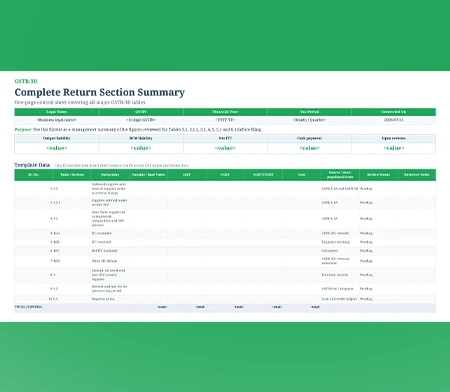
Provide a thorough overview of taxable sales, tax obligations, and input tax credit. Before filing, these papers give a clear summary of GST responsibilities.
The GSTR-3B return is automatically filled with transaction information from sales, purchases, and accounting records. This increases filing accuracy, decreases human data entry, and saves time.
Enter or import your sales, purchase, and expense transactions for the return period. Ensure that all invoices and GST details are accurate before generating the return.
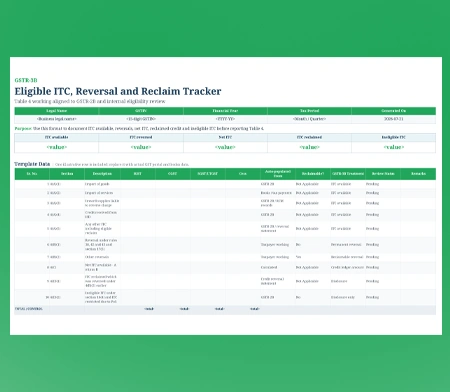
Review your eligible Input Tax Credit (ITC) and GST liability based on your recorded transactions. Verify the figures to ensure accurate tax calculations.
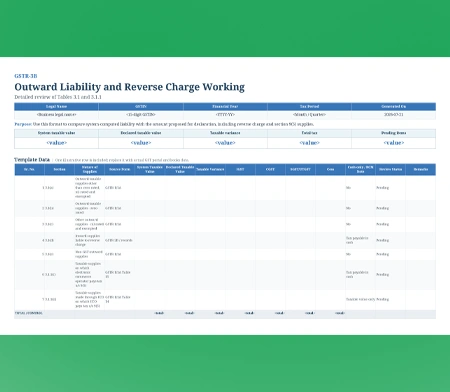
Fill out the GSTR-3B return with the following information: taxable supplies, exempt supplies, reverse charge transactions, qualifying ITC, and tax liability. Before submitting, go over each entry.
Create a GST payment challan and use the available payment methods to settle any unpaid taxes. Before submitting the return, make sure your electronic cash balance is adequate.
Using a Digital Signature Certificate, submit the completed GSTR-3B return via the GST portal. Keep it for compliance records, audits, and future references.
GSTR-3B must be filed by all GST-registered taxpayers, including:
One of the important aspects of staying complaint with GST regulations is understanding the GSTR-3B due dates.

Regular Taxpayers: Submit your GSTR-3B by the 20th of the subsequent month at the latest. For instance, the May 2026 return is due on June 20, 2026.
Category X states/UTs: Taxpayers registered in Category X states are required to file GSTR-3B by the 22nd of the month that follows the quarter.
Category Y States/UTs: By the 24th of the month that follows the quarter, QRMP taxpayers who are registered in Category Y states are required to submit GSTR-3B.
Nil Return Deadline: A nil return must be submitted by the relevant GSTR-3B due date (20th, 22nd, or 24th, depending on the filing scheme), even if there are no business transactions during the tax period.
Consequences of Late Filing: Businesses should file and pay taxes on time because failing to do so may result in late fines and interest on unpaid tax obligations.
Monthly Tax Payment Under QRMP: While GSTR-3B is filed on a quarterly basis under the QRMP scheme, eligible taxpayers must typically pay GST on a monthly basis by the 25th of the subsequent month for the first two months of the quarter.
Persistent non-compliance may result in limitations on the filing of relevant GSTR-3B format returns, and the suspension of some GST services.

Late Fee for Regular Returns: If GSTR-3B is filed after the due date and tax is payable, a late fee of ₹50 per day is charged (₹25 under CGST + ₹25 under SGST/UTGST) until the return is filed, subject to the prescribed maximum limit.
Late Fee for Nil Returns: If there are no business transactions during the return period, a Nil GSTR-3B must still be filed. A late fee of ₹20 per day (₹10 under CGST + ₹10 under SGST/UTGST) is applicable for delayed filing, subject to the prescribed maximum limit.
Outstanding GST Liability: Until the outstanding tax amount is paid, interest at the rate of 18% annually is assessed if GST is not paid by the deadline.
Excess ITC: 24% annual interest may be charged in situations involving excess Input Tax Credit (ITC) claims or improper tax liabilities.
Maximum Late Fee Limit: There is a turnover-based maximum for the overall late fee.
Maximum ₹2,000 per return up to a turnover of ₹1.5 crore
Turnover: ₹1.5 crore to ₹5 crore; maximum return: ₹5,000
Maximum ₹10,000 per return for turnover exceeding ₹5 crore
Nil Return: Each return is limited to ₹500.
The Value of Timely Filing: Businesses can avoid late fines, interest charges, and compliance problems by filing GSTR-3B on or before the deadline. Timely filing ensures accurate tax reporting and improved financial management.