🎉 All-in-One Billing, Inventory & Accounting Platform for Faster Business Growth BUY NOW 👉

GSTR 1 Format and Filing Guide

Explore the latest GSTR-1 format, templates, filing process, due dates, and GST requirements. Learn how to prepare accurate returns and simplify GSTR-1 filing with the right billing software while staying fully GST compliant.

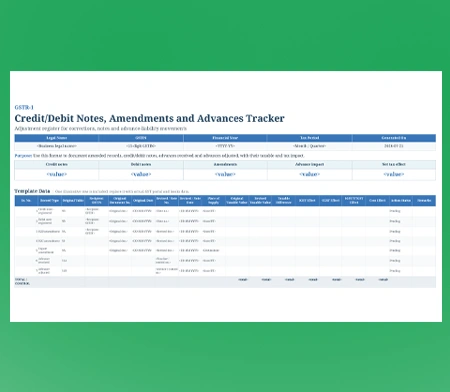
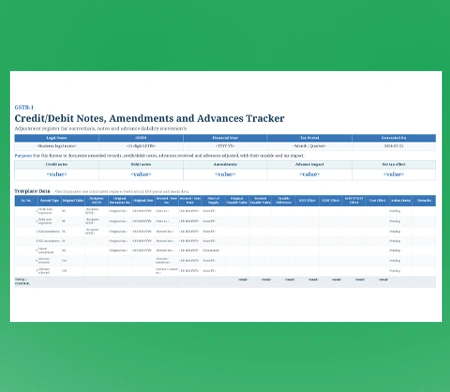
Get Download Professional GSTR 1 Formats

GSTR-1 Format-1

GSTR-1 Format-2

GSTR-1 Format-3

GSTR-1 Format-4

GSTR-1 Format-5

GSTR-1 Format-6


What is GSTR-1 Filing?

GSTR-1 is a GST return that every regular registered taxpayer must file to report their outward supplies (sales) of goods and services. It includes details such as B2B and B2C sales, exports, debit notes, credit notes, advances received, and HSN-wise summaries for a specific tax period.

The information submitted through GSTR-1 helps the GST portal update the buyer's Input Tax Credit (ITC) records and ensures accurate GST compliance for both businesses and customers.

Key Features of Creating GSTR Report in Raseed

Data Auto-Population

Every invoice you generate using Raseed billing software automatically pushes relevant sales details into the internal tax register.

Invoice Reconciliation

Compare your sales records with GST return data to identify missing invoices, mismatches, and discrepancies before submission.

Built-in Validation Rules

Missing GSTINs, incorrect state codes, or tax calculation mismatches are flagged instantly, so you can fix them early.

Due Date Reminders

Raseed features built-in calendar alerts that visually update you on upcoming regular or quarterly GSTR-1 due dates depending on your business type.

GSTN-Compatible Export

Export your GSTR-1 return in GSTN-compliant JSON or Excel formats, ready for quick upload to the GST Portal.

Multi-Branch GST Consolidation

Consolidate sales data from multiple branches or business locations into a single GSTR-1 report for easier GST filing.

HSN Summary Generation

Automatically groups all items sold during the month by their respective HSN/SAC code digits, eliminating spreadsheet recalculations.

B2B & B2C Invoice Classification

Instantly separates transactions based on the presence of a verified client GSTIN, pushing large and small retail transactions into their respective tables.


How to File GST Using the Raseed GSTR-1 Format

Step 1

Create your sales invoices in Raseed. The software automatically calculates CGST, SGST, or IGST based on the customer's location and GST rules.

Step 2

Navigate to the GST Return dashboard. The module naturally structures your regular transactions into the appropriate sections of the official GSTR-1 format.

Step 3

Click the "Run Reconciliation" button. Raseed will scan the return summary for missing client information, mismatched values, or blank HSN fields.

Step 4

Once your review is clean, export the return data into an offline utility JSON or Excel file directly from the app interface.

Step 5

Upload your generated file directly onto the   GST portal, verify and successfully complete your GSTR-1 filing before the deadline.

Who Must File GSTR-1 Filing ?

Every standard registered taxpayer who supplies goods, services, or both is legally obligated to file GSTR-1. 

Standard sole proprietorship businesses
Operating private limited companies
Registered public corporations trading
Active limited liability partnerships
Registered partnership firms
Exempt product lines declared
Mandatory zero sales filings
Temporary casual taxable entities

GSTR-1 Due Date for Every Business

Missing deadlines break your downstream supply chain by delaying your customers' Input Tax Credit (ITC).

Monthly Filers: If your business aggregate annual turnover crosses the ₹5 Crore threshold, your GSTR-1 due date is strictly fixed on the 11th day of the succeeding month.

QRMP Scheme Filers: Taxpayers opting into the quarterly return monthly payment program must submit their structural GSTR-1 format statement by the 13th day of the month following the quarter-end.

Invoice Furnishing Facility (IFF Track): QRMP users wishing to pass credit onto their buyers in non-return months can optionally upload their B2B data using the IFF by the 13th day of months one and two.

Fixed Submission Sequence: You cannot file your summary GSTR-3B return until your baseline sales report is successfully uploaded on the portal.

Late Fees and Penalties for GSTR-1

Delayed returns trigger automatic legal and financial penalties on the GST portal.

Standard Daily Penalty: A statutory late fee of ₹50 per day (divided equally as ₹25 CGST + ₹25 SGST) accumulates automatically for everyday a return stays pending past its deadline.

Nil Return Late Fee: If you have zero sales, transactions, or adjustments to report, missing the GSTR-1 due date still costs a mandatory reduced rate of ₹20 per day (₹10 CGST + ₹10 SGST).

Minimum Turnover-Based Late Fee Caps: For nil returns total late fee absolute limit capped at ₹500. For turnover up to ₹1.5 Crore: Total maximum cap limited to ₹2,000.

Maximum Turnover-Based Late Fee: For turnover between ₹1.5 Crore and ₹5 Crore: Maximum cap limited to ₹5,000. For turnover above ₹5 Crore: Maximum cap limited to ₹10,000 per return document.

Automated Interest Matrix: Reporting historical sales invoices late triggers an automatic 18% per annum interest charge on the underlying tax liability, which must be cleared entirely through cash ledger balances.

E-Way Bill Blockade: If your outward statement remains outstanding for more than 15 days past its deadline, the portal blocks your ability to generate E-Way bills, freezing your logistics operations completely.

Frequently Asked Questions!

GSTR-1 is a mandatory monthly or quarterly statement in India where GST-registered businesses declare all their outward supplies (sales).
All regular and casual GST-registered taxpayers making outward supplies of goods or services should file GSTR-1. This is mandatory whether transactions occurred during the period; nil returns must still be filed.
GSTR-1 is mandatory for almost all regular and casual GST-registered businesses to report their outward supplies (sales). Even if you have no sales in each period, a Nil return is required.
GSTR-1 is filed to officially report all outward supplies (sales of goods and services) to the government. This filing is crucial because the submitted invoice details auto-populate the buyer's GST portal, allowing them to claim Input Tax Credit (ITC). 
If a supplier files GSTR-1 after the due date (usually the 11th of the following month), the supplier is liable for late fees, and the recipient's Input Tax Credit (ITC) will be deferred to the subsequent month's GSTR-2B, potentially blocking their ability to file current returns.
Failing to file GSTR-1 triggers a late fee of ₹50 per day (₹20 for Nil returns) and restricts you from filing subsequent returns.
Raseed paths