πŸŽ‰ All-in-One Billing, Inventory & Accounting Platform for Faster Business Growth BUY NOWs πŸ‘‰

Stock Register Template for Better Management

Maintain control over your business inventory in real time with Raseed's free stock register formats. Reduce manual calculation errors, track product movements instantly, prevent stockouts or overstocking, and maintain accurate inventory records.

Download Free Stock Ledger Format for Business

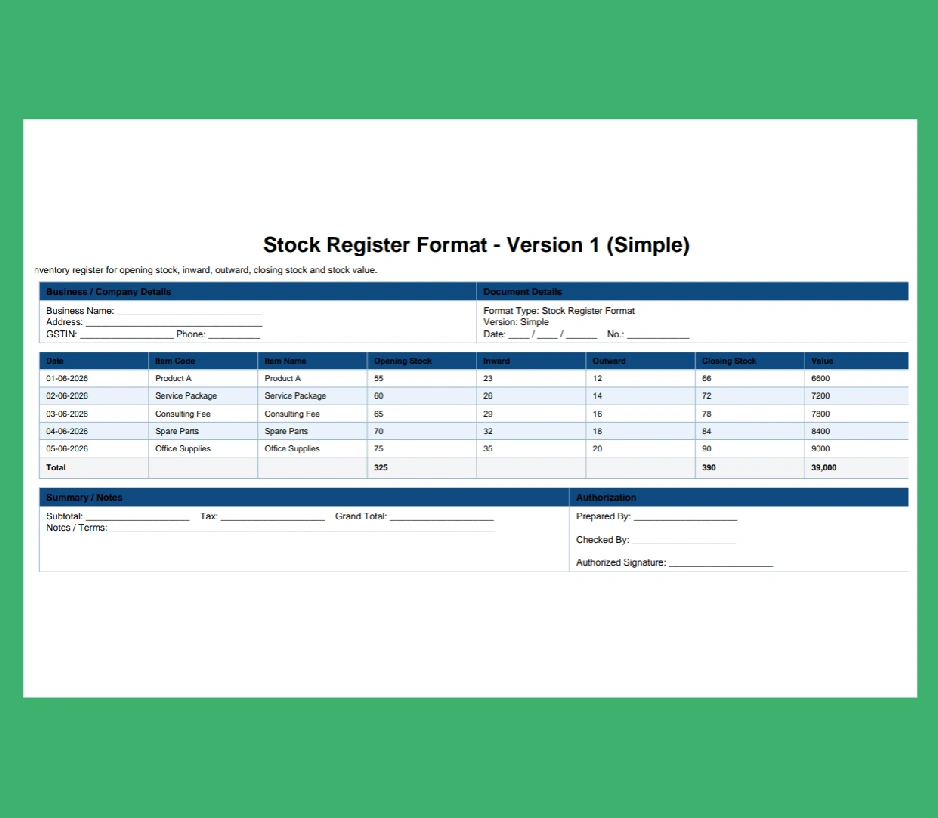
Stock Ledger Format-1

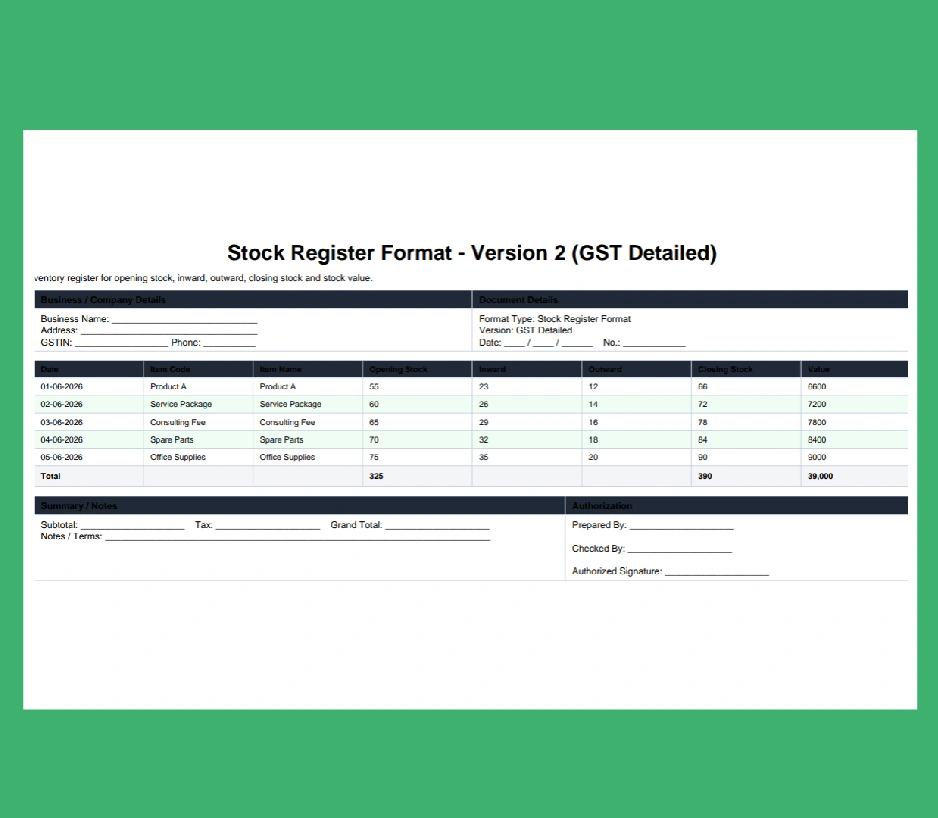
Stock Ledger Format-2

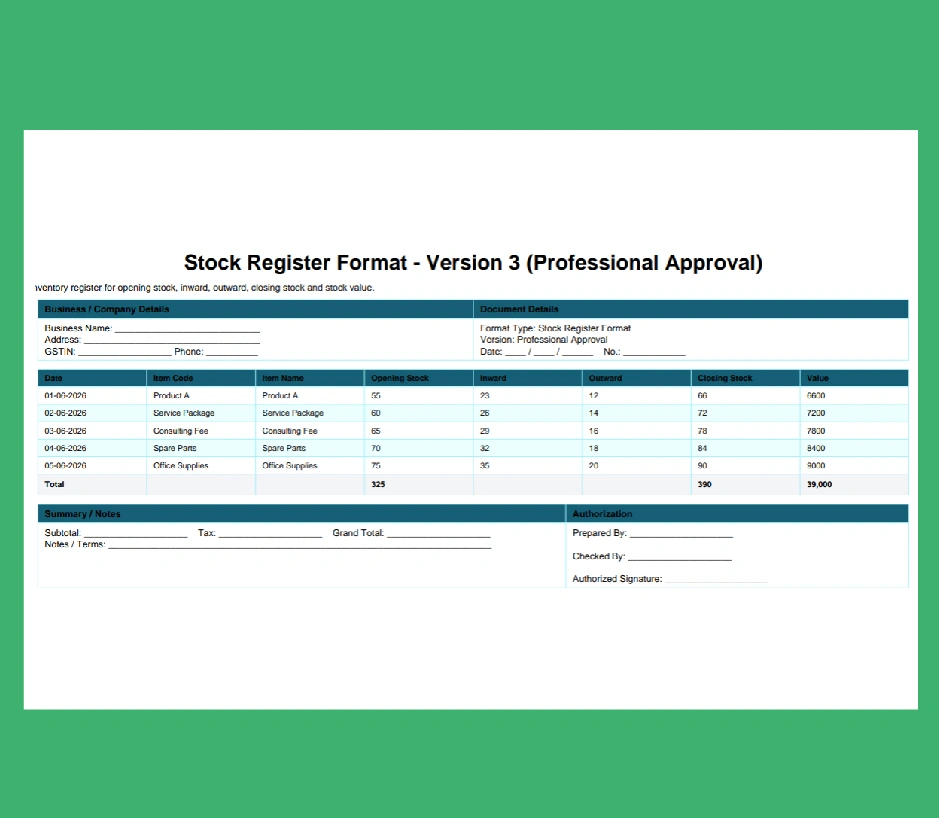
Stock Ledger Format-3

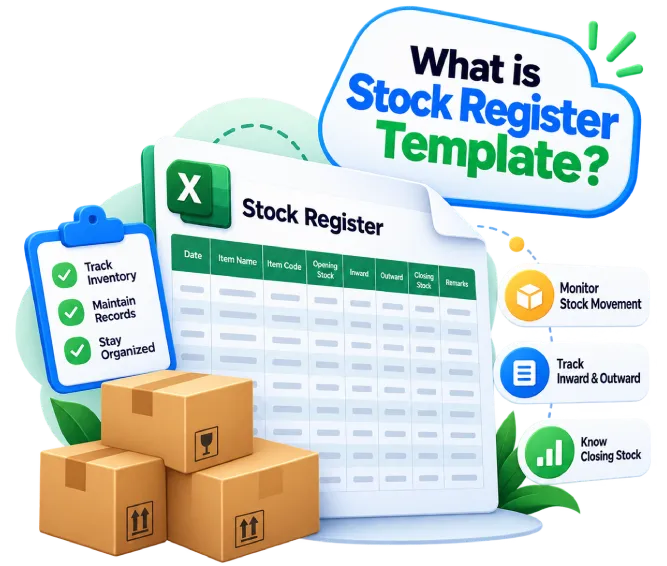
What is a Stock Register Template Format?

A stock register template is an inventory tracking document that records every stock movement, from goods received to goods sold or transferred. It helps businesses keep a record of available inventory.

With a well-organized stock register, businesses can reduce manual errors, improve inventory control, and simplify stock verification during audits and stock checks.

Features of Raseed Stock Register Template

Real-Time Stock Updates

Effortlessly log incoming and outgoing stock with an automated system. The internal stock register template structure adapts instantly as sales invoices or purchase receipts are generated, making manual record-keeping obsolete.

Detailed Batch Tracking

Easily track items by specific batches, serial numbers, or manufacturing and expiry dates. This feature ensures that perishables or time-sensitive items are sold efficiently using FIFO (First In, First Out) methods.

Low Stock Alerts

Set custom reorder thresholds for individual items. The software automatically highlights products running low, enabling you to generate purchase orders well before running out of critical items.

Barcode Scanner Integration

Accelerate your stock-taking process by pairing a hardware barcode reader or our mobile OCR scanner tool. Scanning products immediately update their quantity across your stock ledger format records.

Multi-Warehouse Management

If your business has multiple storage hubs or retail outlets, Raseed lets you track stock distribution seamlessly from a central, unified cloud dashboard.

Automated Valuation Reports

Get instant valuation of your available inventory using standard costing methods. This feature eliminates manual number-allotting during tax periods or annual accounting closures.

Unit of Measurement (UOM) Conversion

Buy items in bulk crates, store them in boxes, and sell them as single piecesβ€”the system converts quantities fluidly across billing and warehousing profiles.

Supplier Lead-Time Tracker

Monitors vendor performance by comparing the purchase order date against the actual delivery stamp. The system builds historical reliability metrics for each supplier, highlighting who consistently delivers on time.

Follow These Steps to Maintain a Flawless Stock Register

Step 1

Assign unique SKU identifiers, descriptive names, and custom category tags to establish your core product structure.

Step 2

Log the exact opening physical quantities along with their initial purchase values to set your financial starting point.

Step 3

Record every inbound vendor's purchase and outbound client invoice instantly with real-time timestamps and tracking numbers.

Step 4

Establish custom low-stock reorder limits for each individual item profile to prevent unexpected product shortages.

Step 5

Perform regular cycle counts to match physical warehouse stock against your system numbers and resolve discrepancies immediately.

Key Highlights of an Effective Stock Ledger Format

A well-structured inventory log is designed to keep data organized, traceable, and highly functional across various business departments

Accurate Running Balance
Flexible Costing Layouts
Audit-Ready Architecture
Supplier Bill Reference
Multi-Tiered Cost Layering
Source-Document Cross-Reference
Landed-Cost Capitalization Map
Separate Analytics Reports

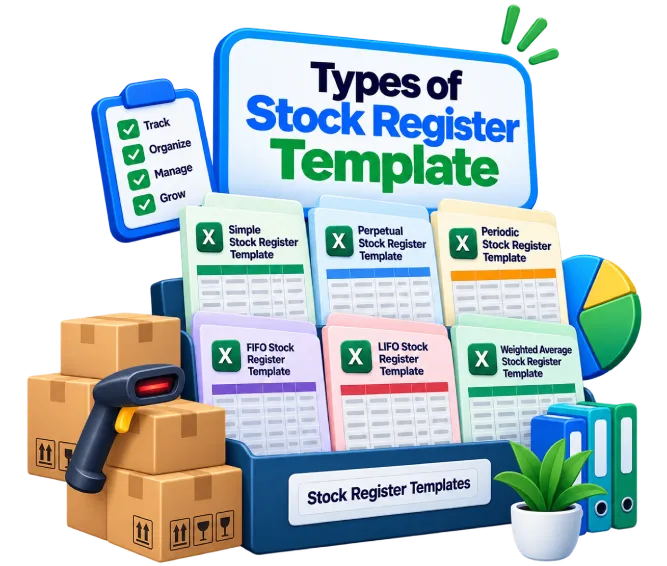
Different Types of Stock Register Formats

Depending on the operational size, industry standards, and complexity of your inventory, different layouts are used to capture the right level of product details.
Simple Quantity Stock Log: A minimal, straightforward layout focusing strictly on incoming numbers, outgoing numbers, and current physical balances. Perfect for small retail counters or basic trading setups.

Detailed Material Register: A comprehensive template that logs tracking specifics like vehicle numbers, delivery challan details, supplier addresses, and quality check statuses. Ideal for large production units or manufacturing plants.

Batch-Wise Stock Template: Specifically designed for pharmacy, food, or cosmetics businesses. Features dedicated columns for batch codes, manufacturing dates, and strict countdown fields for product expiry tracking.

Production & Raw Material Ledger: Tracks raw ingredients or components moving out of storage and into the factory floor, alongside finished products returning to storage.

Consignment Inventory Log: For businesses that hold inventory owned by third-party vendors until the final point of sale occurs.
Frequently Asked Questions

An inventory register format is a structured layout used to document the chronological flow of items into and out of your business. It tracks incoming vendor deliveries, outgoing customer shipments, and current stock availability to give you absolute control over your warehouse assets.
You can transition seamlessly by downloading our clean inventory register format, entering your current opening stock balances, and uploading it directly into the Raseed billing platform to go live instantly.
Yes, Raseed allows full multi-location customization. You can customize templates to reflect individual warehouse names, unique barcode strings, or distinct operational units under a single company account.
While both track inventory, a stock register focuses on the physical movement (quantity, counts, locations) of goods, whereas a stock ledger format incorporates financial figures, including the monetary valuation, costs per unit, and total asset value of the inventory.
Under GST, there is not strictly prescribed electronic or physical layout for a stock register, but it must be kept and maintained at your principal place of business. It can be kept physically or digitally using GST billing software.
Raseed paths