GST Sale Bill Format for Easy Invoicing
Generate quick invoices and share them with customers through WhatsApp or email using the proficient sale invoice format. Start streamlining the billing procedures for your business operations.
Generate quick invoices and share them with customers through WhatsApp or email using the proficient sale invoice format. Start streamlining the billing procedures for your business operations.
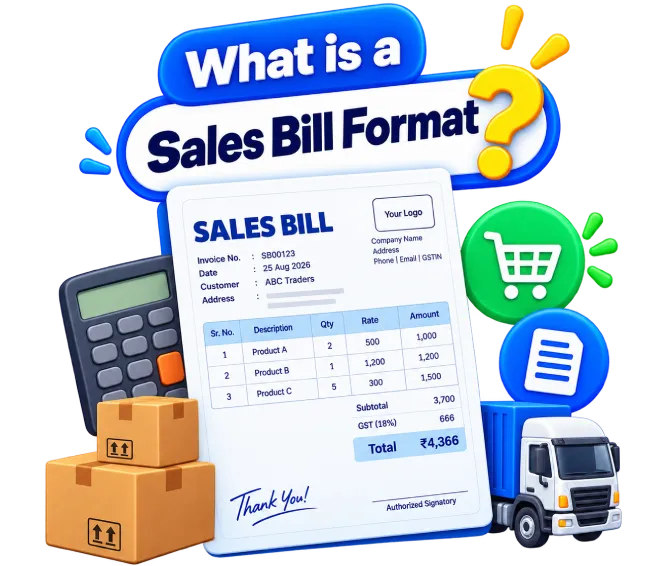
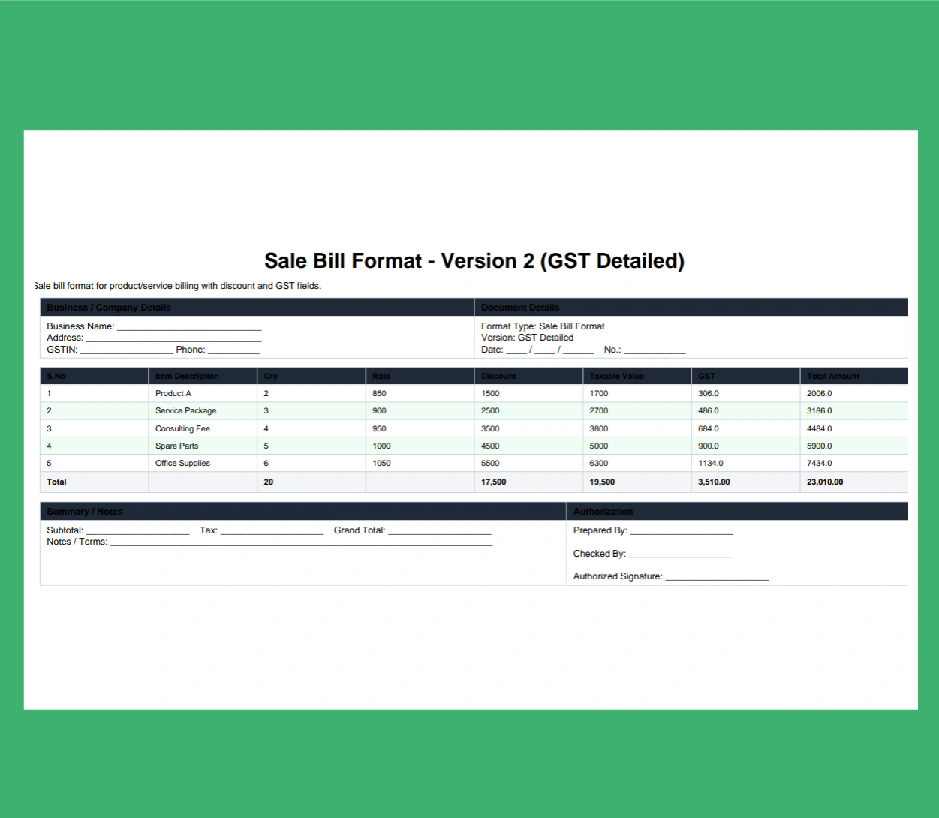
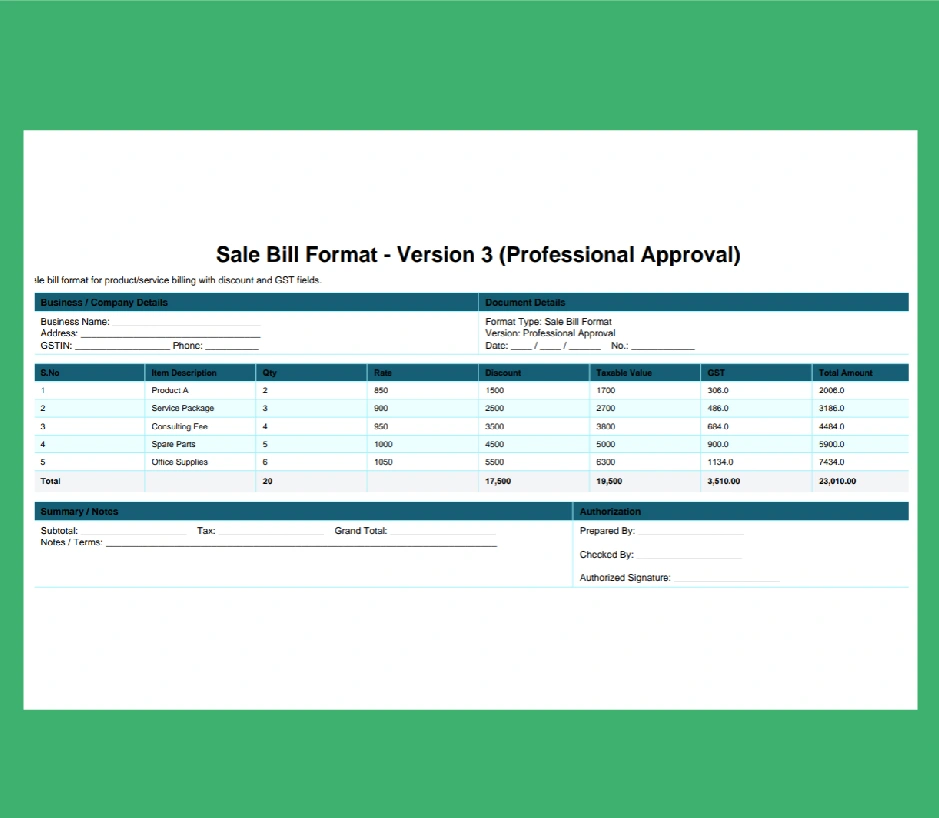
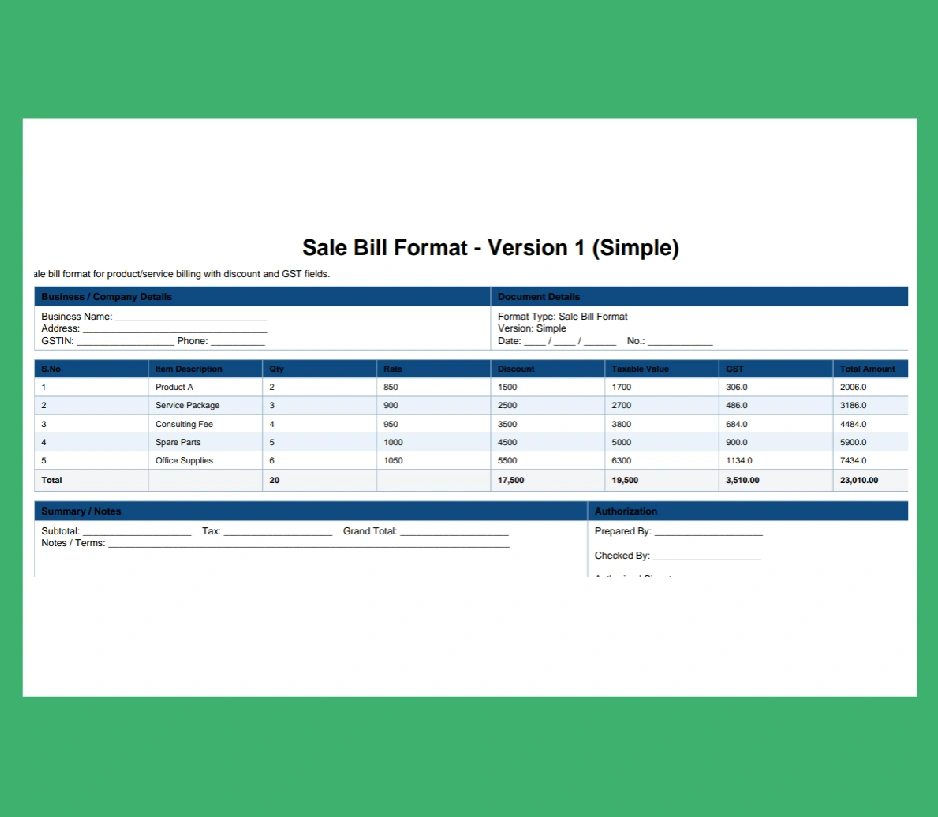
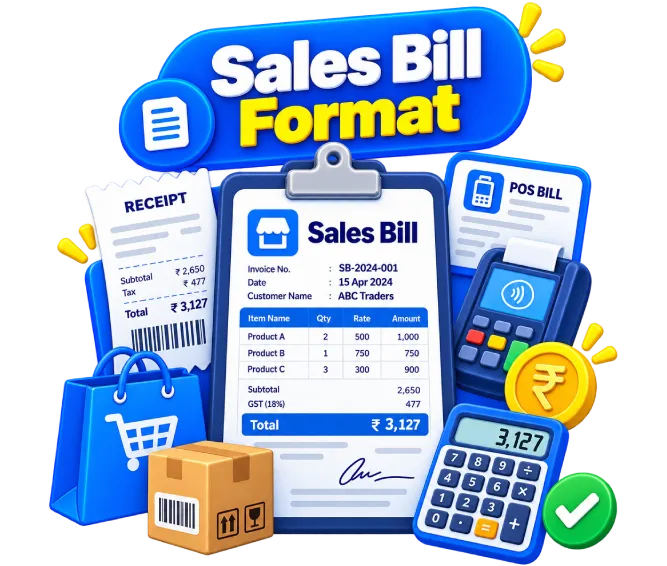
A sales bill format is a structured document used to record and present the details of products or services sold, including pricing, taxes, and payment information.
It includes important details such as customer information, item descriptions, quantities, GST details, and total amounts, helping businesses create accurate invoices and maintain clear transaction records.
Customers receive the most clarity when pricing, taxes, and discounts are broken out on the bill, which promotes trust and avoids misunderstandings.
You can quickly monitor stock movement and pinpoint your best-selling items with itemized lists of what was sold and in what quantities.
It protects both parties in disputes, damaged goods, and warranty claims by acting as a legally binding contract and record of transaction.
A structured format ensures that important tax information (such as GSTIN, CGST, and SGST) is included, simplifying tax filing, audits, and avoiding fines.
It makes tracking income and account reconciliation at the end of the month easier by giving each sale a unique, chronological reference.
It reduces uncertainty and motivates customers to pay on time by outlining the precise amount owed, terms of payment, and due dates.
A well-designed sales bill format with your firm's logo and contact information presents your company as reputable, reliable, and well-established.
For consumers who need to handle returns, exchanges, or make claims for warranties and after-sale services, it serves as an essential document.
Add customer and business information, including the GSTIN number, address, phone number, company name, and logo. Additionally, the buyer's name, shipping address, and, if relevant, their tax identification.
Give each invoice a distinct, sequential number to aid in accounting and tracking. Add the date of the invoice and the payment deadline.
Make an easy-to-read table that lists the goods or services that were sold together with their descriptions, quantity, rate, total, and HSN/SAC code.
Compute the subtotal, add any necessary taxes, account for any given discounts, and get the total amount owed beneath the itemized list.
Clearly state when and how you would like to be paid. Enumerate the payment options you accept along with any special terms and limitations.
A well-organized sales bill format, also known as a sales invoice, ensures legal compliance, expedites transaction processing, and gives both the buyer and the seller accurate financial records.
Every sales invoice helps businesses maintain records and track performance. Different businesses use different sales bill formats based on their requirements. Here are 6 commonly used sales bill formats across industries.
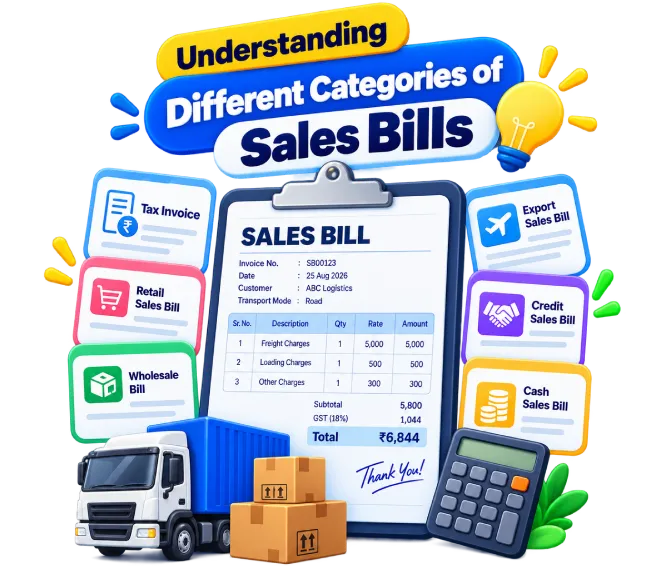
Standard Sales Invoice: Requests payment after the items are delivered and is used for B2B and B2C transactions. retail, wholesale, and service-oriented industries benefit most from it.
Tax Invoice: A legally compliant document used to claim tax credits is called a tax invoice or GST invoice. It is favored by tax-registered enterprises and includes comprehensive tax breakdowns.
Proforma Invoice: Before products or services are delivered, purchasers receive a preliminary estimate known as a proforma invoice. It is helpful for international shipments.
Retail Invoice: A retail invoice is a streamlined bill that is sent straight to the customer at the Point of Sale (POS). Supermarkets, clothes stores, eateries, and walk-in retail businesses frequently use it.
Bill of Supply: It provides a record of sale without the tax component. It is best for small businesses, dealers, and suppliers of exempt goods or services.
Recurring Invoice: Issued automatically on a regular schedule for continuous services. It is best suitable for subscription models, SaaS, and retainer agreements.