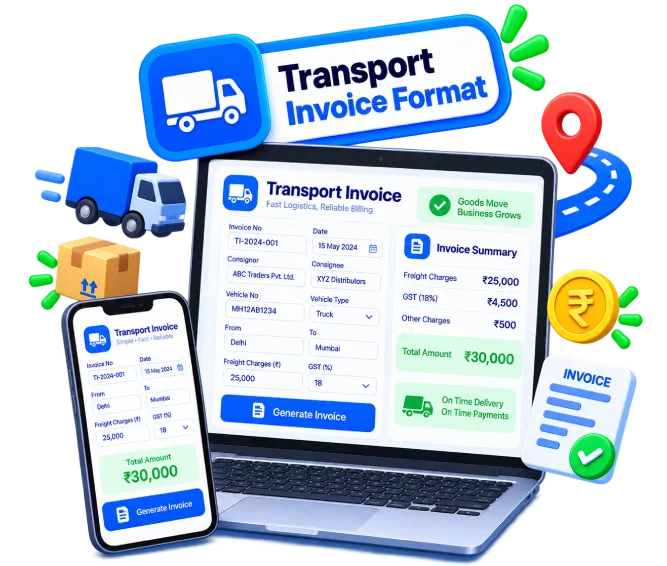
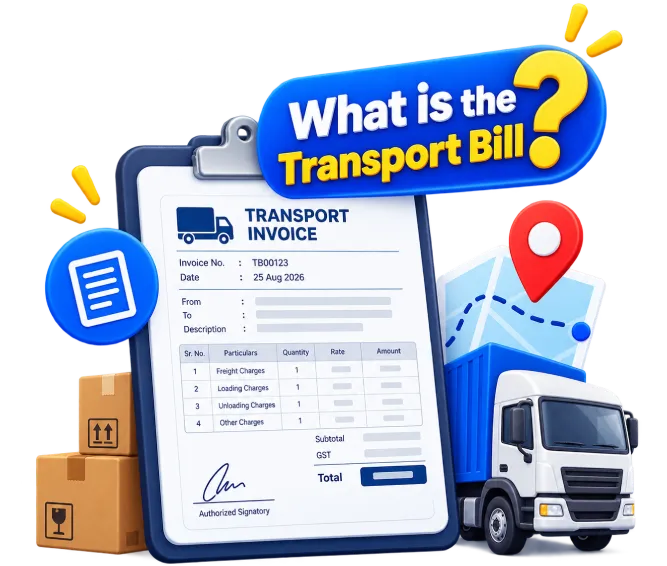
Are you into logistics and transportation and looking for a simple transport bill template to get payments faster or to maintain clean records? Our transport invoice format is a perfect fit for goods movement and logistics businesses.
A transport invoice format is a structured document used to create professional invoices for transportation and logistics services, helping businesses record freight charges, shipment details, taxes, and payment information accurately.
It serves as a clear billing record for both the transporter and the customer, ensuring transparency, accurate documentation, and timely payments.
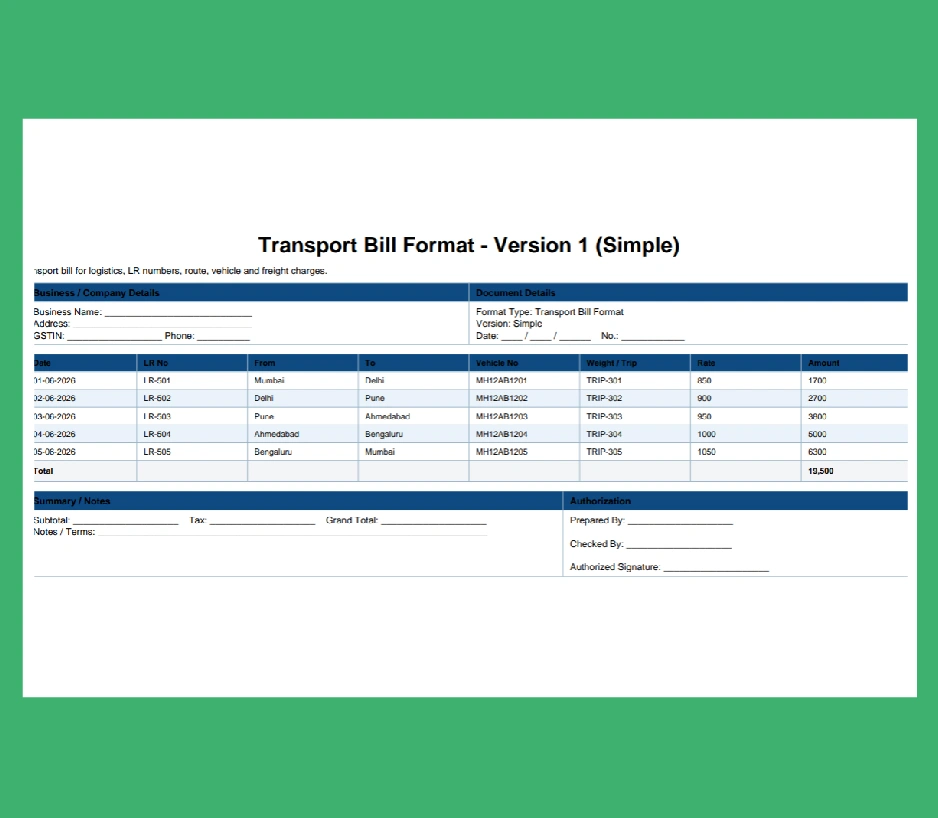
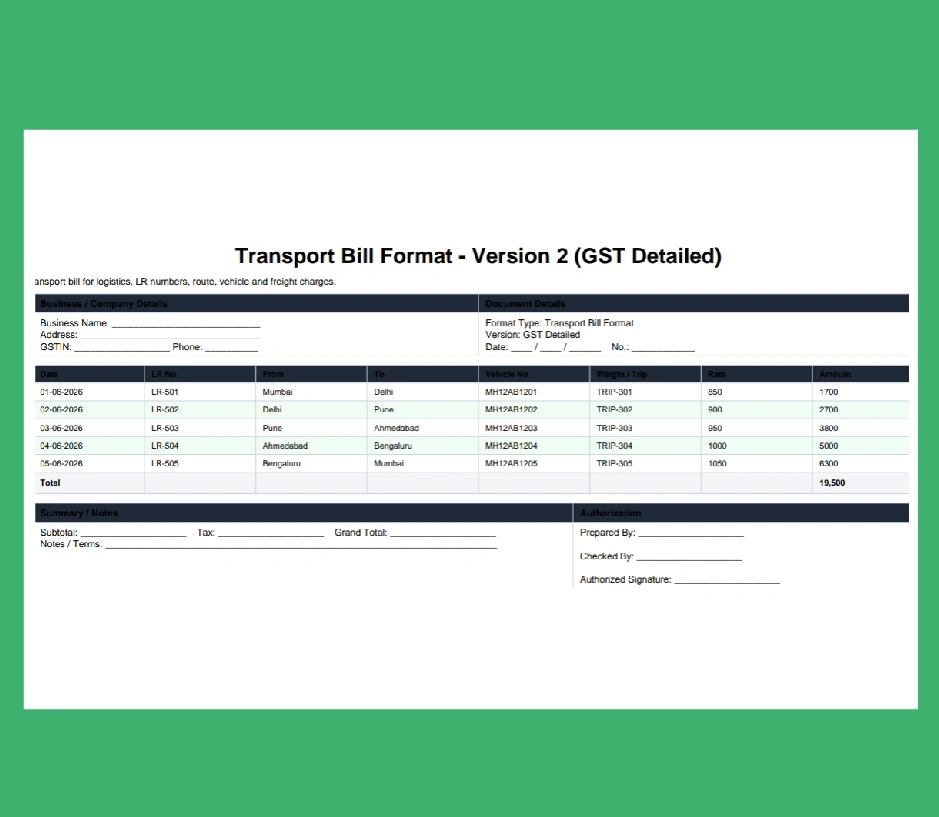
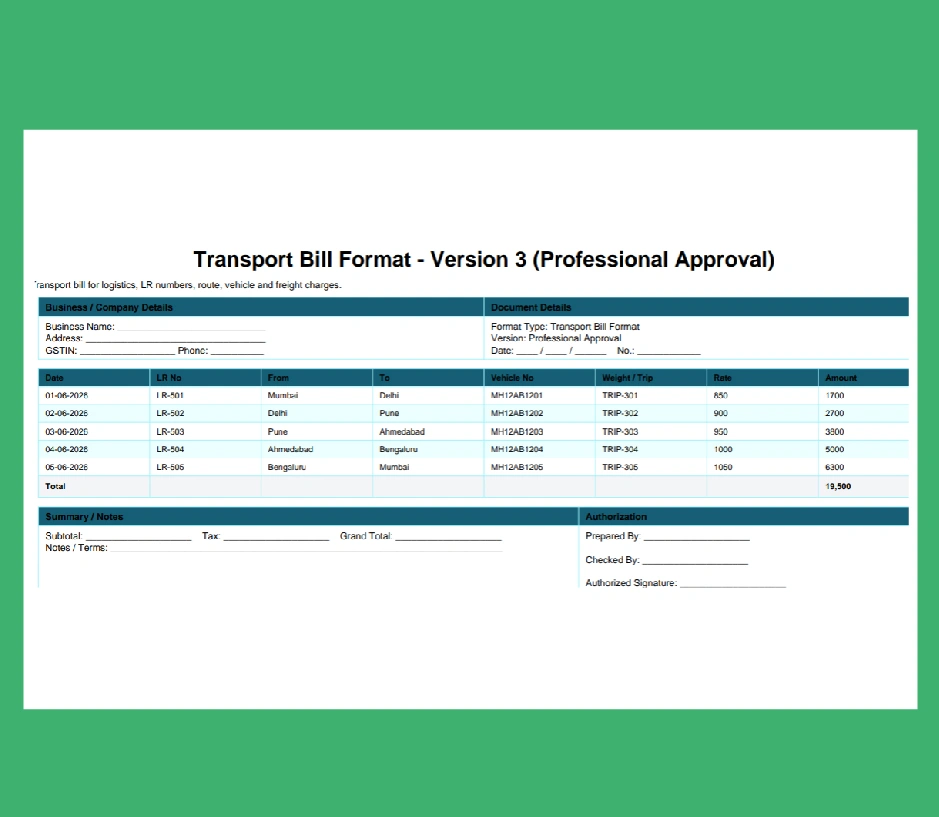
Goods transport Invoice helps to minimize manual data entry errors with standardized sections for cargo weight, vehicle information, and Lorry Receipt (LR) numbers.
Clients can process and approve payments without exchanging messages thanks to clear breakdowns of base freight, handling fees, and taxes.
With well-organized bills without any errors, your transport business ensures compliance with standards and regulations.
A clear, auditable record that makes bookkeeping and tax filing easier is provided by unique bill numbers, issue dates, and customer information.
By removing the need to prepare invoices from scratch for each shipment, customizable digital templates reduce administrative time.
Including your business's address, logo, and official signature strengthens your brand's credibility and builds consumer confidence.
You can avoid misconceptions and offer tangible evidence of service by clearly stating trip dates, pickup/drop locations, and item descriptions.
To expedite vehicle transportation and save manual labor, many contemporary templates enable you to seamlessly pull invoice data into system-driven e-way bill updates.
For legal clarity and to avoid disputes, fully define cargo responsibility by mentioning the names, addresses, and tax information of the consignor and consignee.
You need to add the transporter's name, bill number, date, and contact information to create and store accurate details of every bill.
Add the item description, quantity, weight, vehicle number, and mode of transportation for accurate shipping monitoring.
In order to calculate the total amount due, you need to add freight charges, loading, unloading, tolls, and other expenses.
For accounting compliance and future usage in audits and reconciliations, examine every detail, approve it, and send the transport bill to clients.
A standard transport bill template must look professional to include accurate records. These areas assist companies and transporters to avoid misunderstandings.
Different invoicing structures are needed for different transport operations. The following six transport bill styles are frequently utilized by enterprises, logistics companies, and transportation companies:
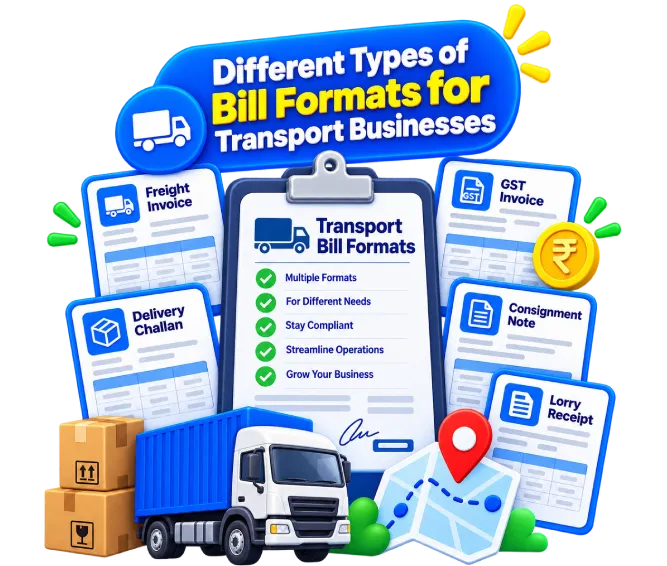
Goods Transport Bills: The transfer of products from one place to another is billed using this format. It contains information about the consignor and consignee, freight charges, and the total amount due.
Parcel Transport Bills: For courier and package transportation services, a parcel transport bill format is created. Shipment information, delivery location, and transportation costs are all recorded.
Freight Bills: Logistics and freight businesses frequently use this format for the transportation of bulk cargo. It covers fuel surcharges, freight fees, loading/unloading charges, and more.
Vehicle Rental Transport: This format is used for renting trucks, vans, or other commercial vehicles for transportation. It includes all vehicle details.
Trip-Based Transport: For every completed trip, this structure creates a different bill with necessary trip and location details.
Monthly Transport Bills: A single invoice is created from all the transportation services provided each month. Businesses with regular transport contracts often use it.