CGST vs SGST : Meaning Differences Rates and Examples

Understanding GST becomes easier when you know how the tax is divided between the Central and State Governments. For transactions that take place within the same state, GST is generally divided into two components: Central Goods and Services Tax (CGST) and State Goods and Services Tax (SGST).
What Is CGST?
- Central Excise Duty
- Service Tax
- Certain other central indirect taxes
What Is SGST?
CGST and SGST Rates
- CGST = 9%
- SGST = 9%
- Total GST = 18%
- CGST = 2.5%
- SGST = 2.5%
- Total GST = 5%
Examples of CGST and SGST
Example 1: 18% GST
Calculation
|
Particulars
|
Amount
|
|---|---|
|
Product Price
|
₹10,000
|
|
CGST at 9%
|
₹900
|
|
SGST at 9%
|
₹900
|
|
Invoice Total
|
₹11,800
|
Example 2: 5% GST
Calculation:
SGST = 2.5% of ₹8,000 = ₹200
|
Particulars
|
Amount
|
|---|---|
|
Product Price
|
₹8,000
|
|
CGST at 2.5%
|
₹200
|
|
CGST at 2.5%
|
₹200
|
|
Invoice Total
|
₹8,400
|
Difference Between CGST and SGST
The main difference between CGST and SGST is the government associated with each component.
|
Basic
|
CGST
|
SGST
|
|---|---|---|
|
Full form
|
Central Goods and Services Tax
|
State Goods and Services Tax
|
|
Levied by
|
Central Government
|
State Government
|
|
Applies to
|
Intra state supplies
|
Intra state supplies
|
|
Revenue component
|
Central Government
|
State Government
|
|
Charged with
|
SGST
|
CGST
|
|
Rate
|
Generally half of the applicable GST rate
|
Generally half of the applicable GST rate
|
CGST vs SGST: When Are They Charged?
Seller in Tamil Nadu → Customer in Tamil Nadu
Seller in Tamil Nadu → Customer in Karnataka
Therefore, identifying whether a transaction is intra state or interstate is important when preparing a GST invoice.
Why Is Understanding CGST and SGST Important?
Understanding the difference between CGST and SGST can help businesses manage their GST responsibilities more accurately.
- Show the appropriate GST components on invoices
- Maintain separate CGST and SGST records
- Understand the total tax charged to customers
- Support accurate GST return filing
- Maintain better accounting records
- Reduce errors in GST calculations
CGST, SGST and Input Tax Credit
Input Tax Credit (ITC) allows eligible businesses to use GST paid on qualifying purchases against their output GST liability, subject to applicable conditions and utilization rules.
Understand the Difference Before Billing
For businesses, understanding these components is important for accurate invoicing, accounting, ITC records, and GST compliance. A clear understanding also makes it easier to check GST calculations and maintain proper transaction records.

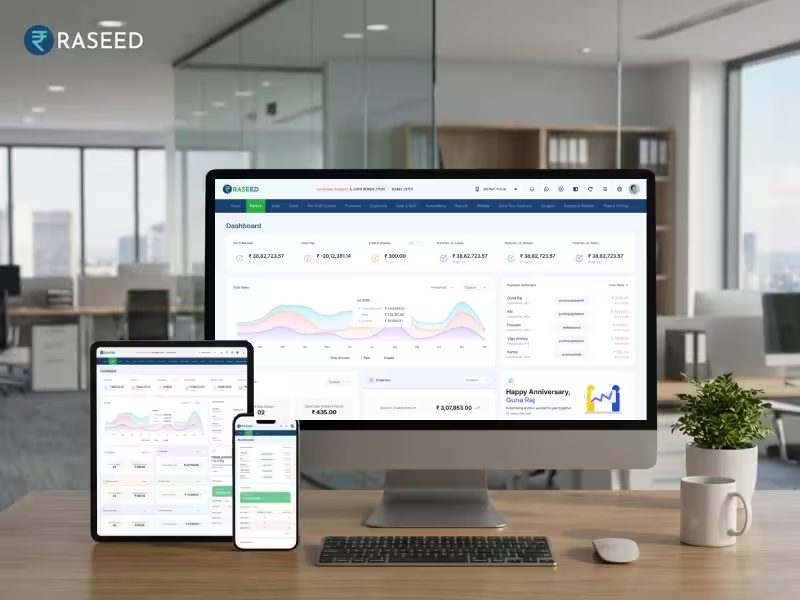
GST Billing & Invoicing Software
Category List
Transform your billing with our top-notch software. Fast, accurate invoicing—start optimizing today!
