Trading Business in India: Types & How to Start

By Raseed
Raseed Editorial Team
Last Updated
Buying a product from one place and selling it somewhere else sounds simple, but a successful trading business needs good product selection, reliable suppliers, proper pricing, and careful stock management.
Unlike manufacturing, trading does not involve producing goods. The business purchases products from manufacturers, wholesalers, or distributors and sells them to retailers, other businesses, or customers.
With different markets and product categories available, a trading business in India can be started at different scales depending on the products, customers, and investment available.
What Is a Trading Business?
A trading business focuses on buying and selling goods rather than manufacturing them.
A trader may purchase products directly from manufacturers or distributors and sell them through a shop, to other businesses, or through online channels. Some traders operate within a local area, while others supply products across different states or even international markets.
The focus is on sourcing products at the right price, maintaining stock, managing sales, and building reliable supplier and customer relationships.
Types of Trading Business in India
Trading businesses can follow different models depending on the products and target market.
Domestic Trading
Domestic trading involves buying and selling goods within India. This includes wholesale businesses, retail distribution, dealerships, and regional supply businesses. It can be a practical option for entrepreneurs who want to focus on local or regional customers.
Import and Export Trading
Import and export businesses involve buying products from international suppliers or selling Indian products to customers in other countries. Businesses involved in import or export generally need to meet applicable regulatory requirements, including obtaining an Importer Exporter Code (IEC) where required.
Online Trading
Online trading businesses sell products through their own websites, social commerce channels, or online marketplaces. Reselling, e-commerce, and certain drop shipping models can operate under this category, depending on how the business is structured.
Commodity Trading
Commodity trading deals with products such as agricultural goods, metals, energy products, and other commodities. This area can involve significant price fluctuations and is subject to specific market and regulatory requirements.
How to Start a Trading Business in India
Starting a trading business in India requires more than choosing a product and finding a buyer. A few basic steps can help create a stronger foundation.
Step 1: Choose Your Product Category
Look for products with consistent demand and check the competition, supplier availability, pricing, and expected margins before investing.
Step 2: Choose a Business Structure
Select a suitable business structure based on your scale, ownership, and future plans. Depending on the business, options may include a proprietorship, partnership, LLP, or private limited company.
Step 3: Complete the Required Registrations
Set up a business bank account and obtain the applicable GST registration, licences, and other registrations required for your type of trading activity.
Step 4: Find Reliable Suppliers
Compare suppliers based on pricing, product quality, delivery timelines, minimum order quantities, credit terms, and return policies.
Step 5: Set Up Billing and Inventory Management
Before starting regular sales, put a proper system in place to manage purchases, sales, stock, expenses, and GST related records. This becomes increasingly important as the number of transactions grows.
Common Challenges in a Trading Business
A trading business can face several day to day challenges, especially when transactions and inventory increase.
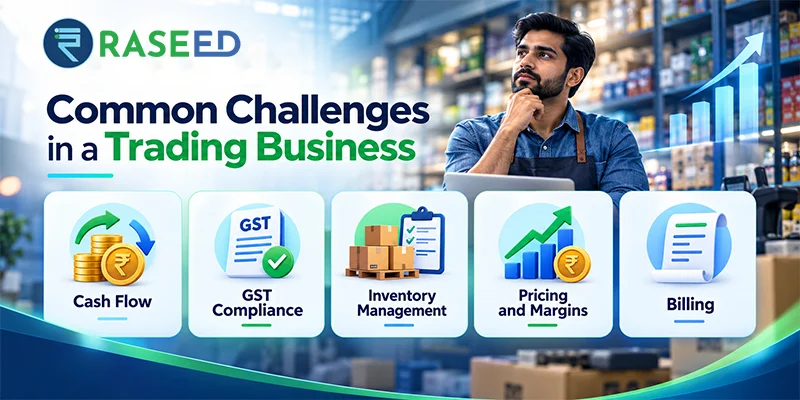
- Cash Flow: Money can get tied up in unpaid customer invoices or excess stock.
- GST Compliance: Businesses need to maintain accurate invoices, tax details, and GST records.
- Inventory Management: Too little stock can lead to missed sales, while excess inventory can block working capital.
- Pricing and Margins: Purchase prices, competition, discounts, and market changes can directly affect profit margins.
- Billing: Manual billing can take more time and increase the chances of errors as transaction volumes grow.
How Raseed Helps Trading Businesses
For traders, billing and inventory records are closely connected. A sale affects stock, customer records, payments, and business reports.
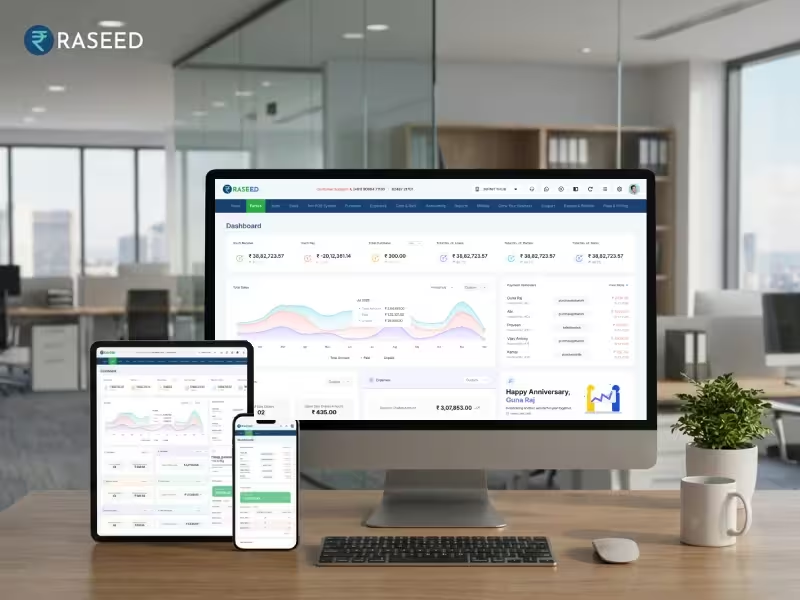
Raseed helps businesses manage billing, inventory, expenses, customer records, GST related information, and analytics in one place. Traders can maintain sales and purchase information, monitor stock, manage customer transactions, and review business data without keeping each record separately.
This can be useful for retailers, distributors, wholesalers, and other businesses that handle regular product sales.
Choosing the Right Tools for Your Trading Business
Running a trading business in India involves managing several moving parts at the same time. The right products and suppliers are important, but so are accurate billing, stock control, customer records, and regular financial tracking.

As the business grows, keeping these records organized can make daily operations easier to manage. Raseed gives traders a single place to manage their key business transactions and keep their records ready for regular GST and business review.
GST Billing & Invoicing Software
Run Your Business the Easy Way
Category List
Accounting Software Insights
3
Automation in Finance
8
Billing Software Guides
19
Billing Software Insights
57
Business Management Software
38
Cash Flow Management
0
Financial Management
18
Freelancer Financial Tools
2
GST Compliance
2
Healthcare Solutions
2
Hospitality Solutions
3
Industry News and Updates
0
Industry-Specific Accounting
1
Inventory Management
7
Invoicing Best Practices
13
Raseed-guides
26
Retail Solutions
4
Small Business Solutions
28
Supply Chain Management
3
Technology Trends
69
Transform your billing with our top-notch software. Fast, accurate invoicing—start optimizing today!
