Restaurant Billing Software Demo: Price, Features & Benefits
- Home
- ›› Blog ››
- Restaurant Billing Software

That is where a proper demo becomes useful. It gives you a chance to see the software in action, understand what you are getting, and compare the restaurant billing software demo with the features your restaurant will use every day.
Before choosing a system, there are a few things worth testing, asking, and checking.
Start With the Way Your Restaurant Works
The software should fit the way your restaurant operates rather than forcing your team to change every process around the system. So, demo can help you walk through your actual workflow and see where the software fits before comparing restaurant billing software pricing between different options.
What Should You Test During a Restaurant Billing Software Demo?
Test a Busy Billing Situation
Try Different Payment Modes
Check What Happens with Internet Problems
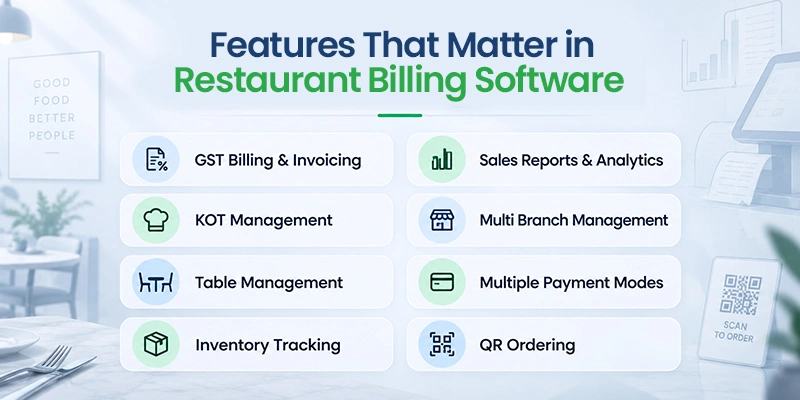
Features That Matter in Restaurant Billing Software
GST Billing and Invoicing
KOT Management
Table Management
Inventory Tracking
Restaurant inventory changes constantly. Ingredients are purchased, used, wasted, and replenished throughout the day. Connecting sales with inventory can give you a clearer view of stock movement and help you identify items that need attention.
Sales Reports and Analytics
Multi Branch Management
Multiple Payment Modes
QR Ordering
QR based ordering can give customers another way to view menus and place orders. For restaurants using this model, check how the QR ordering process connects with billing and order management.
Restaurant Billing Software Pricing: What Are You Actually Paying For?
The cheapest plan is not automatically the lowest cost. When comparing restaurant billing software pricing, look beyond the subscription amount and check what comes with it.
- Number of Counters: Find out whether the plan supports the billing counters and devices you need.
- Included Features: Check whether billing, POS, inventory, reports, expenses, and other required functions are included in the plan.
- Additional Modules: Ask whether features you need later will require separate purchases.
- Renewal Cost: A promotional first year price can look attractive. Always ask what the regular renewal price will be.
- Hardware Compatibility: Check whether the software works with the computers, tablets, printers, and other devices you already use.
- Support: Understand what customer support is included and whether any support services carry an additional charge.
- Number of Outlets: If you plan to expand, check whether adding another location changes the pricing structure.
Looking at restaurant billing software demo this way gives you a clearer idea of the actual cost rather than focusing only on the starting subscription amount.
Where Does Raseed Fit In?
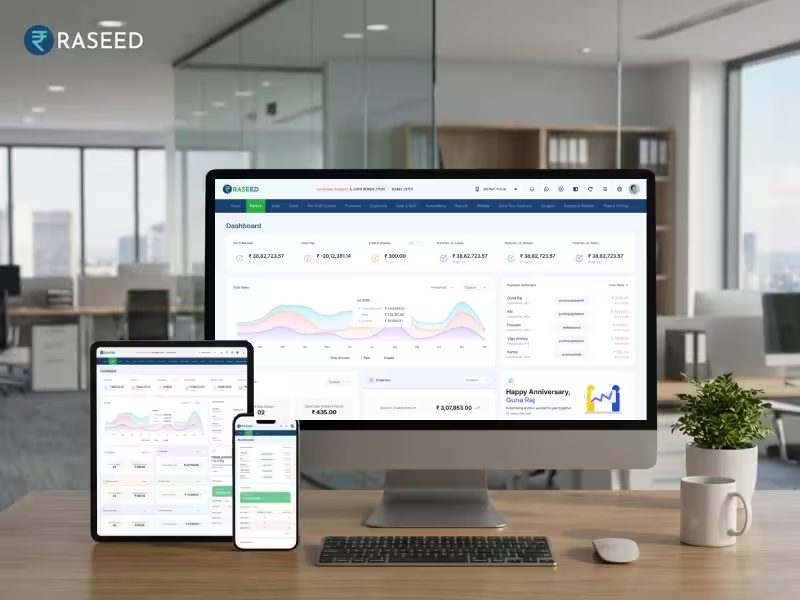
Instead of choosing software from a feature list alone, a Raseed billing software demo lets you see how the system works in real billing situations. You can explore the workflow, understand the available features, and check whether it matches your restaurant’s daily requirements before making a decision.

A Demo Can Tell You More Than a Pricing Page
GST Billing & Invoicing Software
Category List
Transform your billing with our top-notch software. Fast, accurate invoicing—start optimizing today!
