GST Rates in India Slabs, HSN Codes & List (2026)

GST rates affect the price of almost every taxable product or service we buy, from household items and food products to vehicles and professional services. For businesses, choosing the correct rate is also important because it affects invoicing, tax collection, returns, and pricing.
As of 2026, the GST rate structure has been simplified around a 5% merit rate and an 18% standard rate, along with a special 40% rate for selected luxury and demerit goods and services. Some goods and services are also exempt or nil rated. The exact rate still depends on the classification and applicable GST notification.
What Is the GST Rate?
GST Rate Slabs in India for 2026
| GST Rate | General Category |
|---|---|
| 0% / Nil | Selected essential goods and exempt supplies |
| 5% | Merit and commonly used goods and services |
| 18% | Standard rate for many goods and services |
| 40% | Selected luxury and demerit goods and services |
The GST Council recommended moving from the earlier four-rate structure towards a simpler two-rate structure of 5% and 18%, with 40% applying to selected goods and services. The revised rates were implemented for most goods and services from September 22, 2025, with specific transition rules for certain tobacco and related products.
Common Goods and Services Under Different GST Rates
The exact rate can vary by product specification, classification, and notification. Some broad examples are given below.
Nil Rated and Exempt Supplies
5% GST
18% GST
40% GST
Following the revised structure, specified high value or demerit products are subject to this rate. Tobacco and nicotine related products were also moved to the revised structure with specific implementation rules from February 1, 2026.
Understanding HSN and SAC Codes
Businesses should therefore verify the applicable HSN or SAC code along with the GST rate before creating invoices.
Why Correct GST Classification Matters
For businesses handling many products, manually checking the rate for every invoice can also become difficult. Maintaining updated product details with the correct HSN code and tax rate can make billing more accurate.
GST Rates and Business Billing
For example, a business selling a product worth ₹50,000 at 18% GST would charge ₹9,000 as GST, making the invoice total ₹59,000.
If the product is actually covered under a different rate, the tax calculation and invoice total would change. This is why businesses should review their product classification, HSN code, and applicable GST rate whenever there is a change in the GST rate structure.
Keep GST Billing Accurate with Raseed
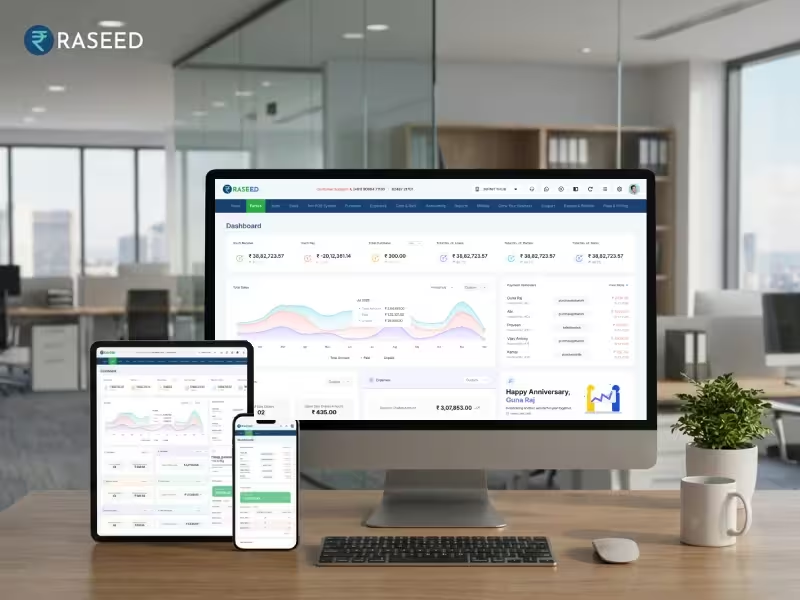
Raseed helps businesses manage billing, inventory, expenses, customer records, GST related information, and business reports in one place. By maintaining product and transaction records properly, businesses can make it easier to prepare invoices and review their GST related information.

Check the Latest GST Rate Before Billing
For businesses, accurate GST billing starts with using the correct product or service classification, HSN or SAC code, and tax rate. Keeping these details updated helps reduce billing errors and supports more accurate GST reporting.
GST Billing & Invoicing Software
Category List
