On any given day, you’re keeping an eye on inventory, handling customer requests, coordinating with suppliers, and making sure everything at the billing counter runs smoothly. When business gets busy, even small delays or mistakes can create unnecessary stress.
That’s where billing software for retail shops and distributors comes in. What started as a simple way to generate bills has evolved into a tool that helps businesses manage sales, inventory, payments, and day-to-day operations from one place. As retail continues to evolve in 2026, businesses are looking for software that can help them work smarter, serve customers better, and stay ready for growth.
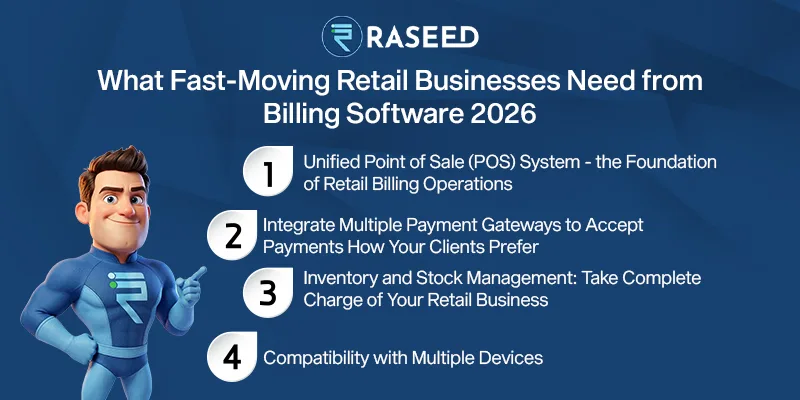
1) Unified Point of Sale (POS) System - the Foundation of Retail Billing Operations
A single Point-of-Sale system improves consumer satisfaction and turns retail operations into a smooth solution. The important features of a single Point of Sale system with billing:
- To expedite billing, quickly scan things or search for products in the database.
- Efficient item retrieval and processing can be cut down on checkout wait times.
- Utilize discounts, divide bills among clients, and compute GST automatically during the checkout process.
Why Unified Point of Sale System for Retailers
- Quicker Checkout Process: Simplify the billing procedure to reduce lines and raise customer satisfaction.
- Decreased Billing Mistakes: Human error in pricing, tax computation, and invoice creation is decreased by automation.
- Centralized Sales Administration: For improved visibility and reporting, keep track of all sales, discounts, and transactions in a single interface.
2) Integrate Multiple Payment Gateways to Accept Payments How Your Clients Prefer
Digital payments are becoming commonplace in the quickly changing retail industry. To enhance customer satisfaction, and boost revenues, shops must use a retail billing solution with multi-payment gateway compatibility. Companies can update their checkout process while maintaining safe and effective operations with connected gateways for payments. In 2026 and beyond, this aids in preserving a competitive advantage.
Options for Payment That Your Billing Software Should Accept
- Permit purchases using widely used payment methods.
- Provide safe online financial transactions.
- Use QR codes to make small transactions easier.
Multi-Payment Integration’s Advantages for Retail Businesses
- Quicker Transactions: Minimize wait times and enhance customer convenience for payments.
- Mitigate the Possibilities of Risk: Reduce theft, mistakes, and overhead related to cash management.
- Increased Conversion of Sales: Providing a variety of payment methods encourages consumers to finish transactions right away.
3) Inventory and Stock Management: Take Complete Charge of Your Retail Business
Store owners may monitor stock levels in real time, avoid stockouts, and maximize working capital with retail billing and inventory management. Sales, purchase, and inventory data are integrated into robust billing software for retail shops and distributors. Retailers can maximize cash flow, simplify procurement, and obtain complete operational control by incorporating inventory capabilities into their retail billing software.
rucial Inventory Features Your Billing Software Must Have
- Ensure accurate inventory by monitoring the sales and payment details for every product transaction.
- Get notifications in advance regarding the stock levels to avoid stock issues.
- For specific industries such as pharmacies and supermarkets, batch tracking and expiration features help to track the quality of product movement.
- Helps manage inventories across several locations to prevent inconsistencies and ensure centralized management.
How Inventory Management Helps the Retail Sector
Good inventory control helps in preventing:
- Stockouts and Decreased Sales: Prevent running out of popular items and losing money.
- Prevents Overstocking: Cut back on surplus inventory that wastes money.
- Track Sales: Monitor stock performance and movement from any location.
4) Compatibility with Multiple Devices
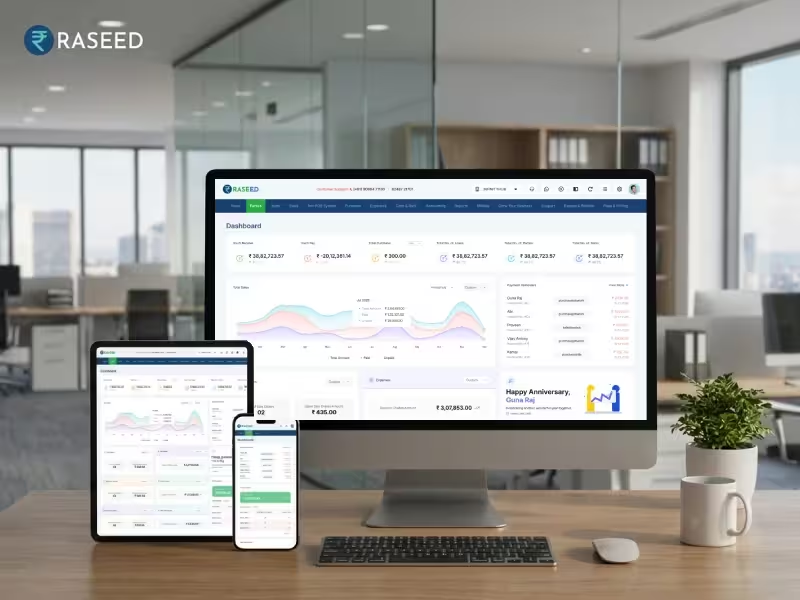
Modern Android billing software for retailers ensures that their business can handle the functionalities across all devices. This convenient approach supports access to desktop, iOS, and Android devices while on the go situations. It also delivers customer happiness in addition to streamlining day-to-day operations.
The Significance of Multi-Device Support
The modern retail environment necessitates billing solutions that work on several platforms:
- Ensure accurate inventory by monitoring the sales and payment details for every product transaction.
- Sales employees' mobility is improved by directly issuing bills on portable devices.
- Utilize mobile devices to manage inventories and sales.
- For back-office accounting, reporting, and inventory management, use desktop computers.
- Advantages for the Retail Sector: Compatibility with several devices and mobile devices enables retail business owners to:
- Faster Checkout: Expedite checkouts, shorten lines, and enhance customer satisfaction.
- Track Sales While Moving: Sales, inventory, and reports may be accessed from any location, facilitating multi-store and hybrid businesses.
5) How CRM Integration Improve Customer Relationships
Retail companies can increase retention, encourage repeat business, and raise overall profitability with the use of contemporary retail billing software that integrates with CRM. CRM integration ensures that every transaction will create enduring customer relationships and boost revenue by selecting retail billing software with customer loyalty program capabilities.
Important Loyalty Features Your Retail Billing Software Should Include
- CRM integration helps to store all customer details such as contact information, preferences, and past purchases in a centralized format.
- To encourage repeat business, you might target devoted customers and provide them with additional discounts or points.
- CRM and accounting integration help boost customer loyalty.
- Encourages Repeat Purchases: Recognizing repeat customers can encourage them to choose your business again.
- Keep Customers Coming Back: Loyalty rewards help strengthen customer connections and encourage repeat purchases.
- Enables Personalized Marketing Campaigns :Understanding customer preferences helps businesses deliver promotions that feel more relevant and valuable.

GST Billing & Invoicing Software
Category List
Transform your billing with our top-notch software. Fast, accurate invoicing—start optimizing today!
