
Here are 10 popular options to consider and what each brings to grocery and retail businesses.
What Should Grocery Billing Software in India Handle?
- Fast Barcode Billing: Scan products quickly without slowing down customers during peak hours.
- Batch & Expiry Tracking: Keep track of products with expiry dates, especially dairy, packaged food, and other perishables.
- GST Billing: Generate invoices with the required GST details while keeping the checkout process simple.
- Inventory Management: Know what is available, what is running low, and what has already been sold.
- Multi-Branch Support: Manage stock and sales across different stores when the business expands.
Best Grocery Billing Software in India
1. Raseed Billing Software
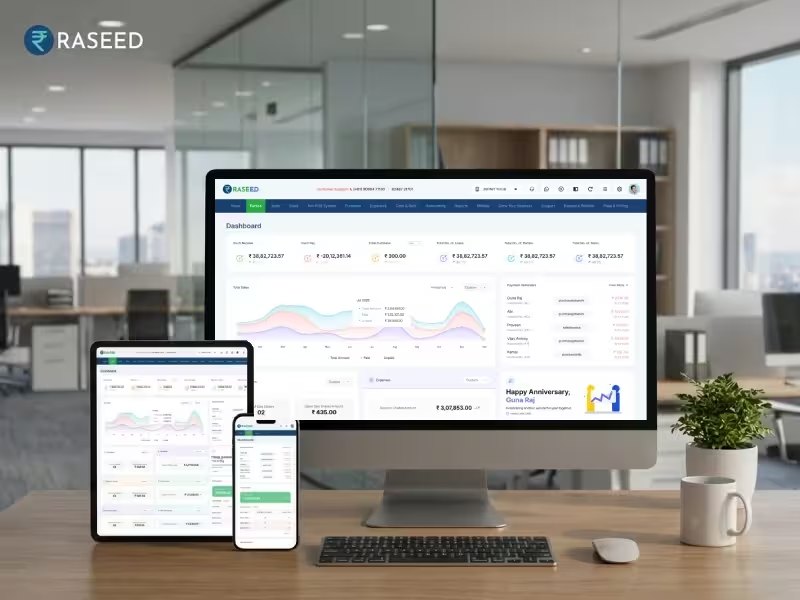
- Quick Barcode Billing: Scan products rapidly to keep queues moving, even during busy shopping hours.
- Weighing Scale Support: Connect compatible electronic weighing scales for faster billing of loose products.
- Batch & Expiry Tracking: Organize products by batch and monitor expiry dates to keep time-sensitive inventory under control.
- Live Inventory Management: Track stock across products, warehouses, and godowns as sales take place.
- GST Invoicing: Create GST-compliant invoices using customizable invoice formats.
- WhatsApp Invoice Sharing: Send digital bills to customers directly after checkout.
- Multi-Branch Management: Monitor billing and inventory across multiple business locations.
- Expense Tracking: Record business expenses alongside sales instead of maintaining separate records.
- Business Reports: Access to sales reports, profit analysis, cash flow information, and other business insights.
2. GoFrugal POS
GoFrugal has a strong presence in Indian retail and offers grocery-focused POS and inventory functions. It covers areas such as barcode operations, weighing scale integration, stock management, expiry tracking, and multi-store operations.
3. Petpooja
Petpooja is well known for restaurant technology, but its retail capabilities also make it an option for businesses looking beyond basic billing. Its platform covers billing and inventory along with other business management functions.
4. VasyERP
5. MargBooks
6. HDPOS Smart
7. Vyapar
Vyapar takes a mobile-first approach to business billing and accounting. For small grocery stores where the owner handles billing directly from a smartphone or tablet, its simple setup can be appealing.
It is particularly suited to businesses moving away from handwritten bills and manual bookkeeping.
8. Accountune
9. RetailWhizz
10. MyBillBook
It covers essential billing and payment-related requirements without requiring a complex setup.
Compare Grocery Billing Software Features
With several billing solutions available for grocery and retail businesses, choosing the right one can be challenging. This comparison provides a clear view of how different solutions perform across their overall capabilities, helping businesses make a more informed choice.
Why Raseed Is a Strong Choice for Grocery Retailers
This is where Raseed moves beyond being just another billing application. It gives grocery retailers a system that connects the counter with the rest of the business.

Grocery Billing Software for Different Types of Stores
GST Billing & Invoicing Software
Category List
Transform your billing with our top-notch software. Fast, accurate invoicing—start optimizing today!
