What is E invoicing Under GST - Process IRN Rules
What is E invoicing Under GST - Process IRN Rules
GST billing has become more structured, and businesses now need to keep invoice details accurate from the moment a sale is recorded. For businesses covered by the e-invoicing system, invoices must be reported to the Invoice Registration Portal (IRP) to receive a unique Invoice Reference Number (IRN) and QR code.
E-invoicing is not about creating an invoice directly on the government portal. Businesses generally prepare their invoices using their billing or accounting software and then report the required details to the IRP. Once the invoice is successfully registered, the IRN and QR code are generated.
Understanding how this process works can help businesses avoid billing mistakes and keep their GST records ready for return filing.
What Is E-Invoicing Under GST?
E-invoicing is a system under GST where specified businesses report certain B2B invoices and other applicable documents to an authorized Invoice Registration Portal. The IRP validates the invoice details and generates a unique IRN along with a QR code.
The registered invoice details can then be used for GST reporting, reducing the need to enter the same information again.
Who Needs to Generate E-Invoices?
E-invoicing applies to taxpayers whose aggregate turnover crosses the notified threshold, subject to the applicable rules and exemptions. The current threshold is ₹5 crore in aggregate turnover in any preceding financial year from 2017–18 onwards.
Businesses should check the latest GST notifications to confirm whether e-invoicing applies to their transactions.
E-Invoice Generation Process
Create the Invoice
The business first prepares the invoice through its billing or accounting software with the required GST and transaction details.
Report Invoice Details to the IRP
The required invoice information is then reported to an authorized Invoice Registration Portal.
Receive the IRN and QR Code
After successful registration, the IRP generates a unique Invoice Reference Number and QR code for the invoice.
Issue the Invoice
The registered invoice can then be issued to the buyer with the required details, including the IRN and QR code.
Important E-Invoicing Features
Unique IRN
Each registered invoice receives a unique Invoice Reference Number. This helps identify and track the invoice within the e-invoicing system.
QR Code
The QR code contains key invoice information and can be used to verify the registered invoice details.
Standard Invoice Data
E-invoicing follows a standard format for reporting invoice information, making GST invoice data more consistent.
GST Return Integration
Invoice details reported through the IRP are made available to the GST system and can be used for relevant GSTR-1 reporting.
Also check out: GST invoice generator
Benefits of E-Invoicing for Businesses
Less Manual Data Entry
Once invoice details are reported through the IRP, businesses do not need to manually enter the same information again for relevant GST reporting.
Better Invoice Tracking
The IRN provides a unique reference for each registered invoice, making it easier to identify invoices in business records.
Easier GSTR-1 Reporting
E-invoice details are made available for relevant GSTR-1 sections, reducing duplicate data entry during return preparation.
Easier E-Way Bill Process
Where applicable, e-invoice data can also support the e-way bill process, reducing the need to enter the same invoice information separately.
Fewer Billing Errors
Using a structured process for invoice reporting can help reduce common mistakes in GST invoice data.
E-Invoicing and QR Code Verification
Keep E-Invoicing Ready with Proper Billing Records
Using reliable billing software can make it easier to maintain consistent invoice records and prepare the required information for GST compliance.
Stay Ready for GST E-Invoicing
E-invoicing software is now an important part of GST compliance for businesses covered under the system. Understanding the process, keeping invoice data accurate and using suitable billing software can make day to day GST record keeping easier.
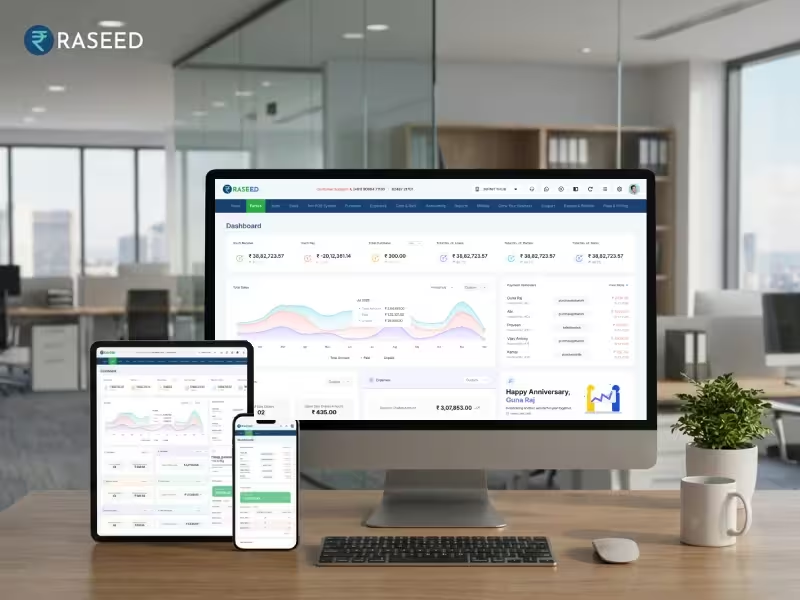
For businesses using Raseed, maintaining organized billing and GST records can help keep invoice information ready for regular business and tax requirements.

GST Billing & Invoicing Software
Category List
Transform your billing with our top-notch software. Fast, accurate invoicing—start optimizing today!
