GSTR 1 Reconciliation Guide Match Sales Data with GST Returns Step by Step

Why GSTR 1 Reconciliation Is Important for Businesses
Keeping Sales Records and GSTR-1 in Agreement
These records should be compared for important details such as invoice number, invoice date, customer GSTIN, taxable value, tax amount, HSN or SAC code and place of supply. If something does not match, the reason needs to be identified before making the required correction.
How to Perform GSTR 1 Reconciliation Step by Step
Start With Your Sales Register
Compare Invoices With GSTR-1
Check Credit and Debit Notes
Review Amendments and Adjustments
Identify and Correct Differences
Once mismatches are found, determine what caused each one. The correction may involve updating the accounting records, reporting an eligible amendment in a subsequent GSTR-1 or making another correction under the applicable GST rules. The exact treatment depends on the type of error and the period involved.
Common Reasons for GSTR 1 Reconciliation Mismatches
Not every mismatch means the business has made a major mistake. Sometimes it is simply a difference in data entry or timing.
Missing Invoices
Duplicate Invoices
Incorrect GSTIN
Tax Rate or Tax Amount Differences
Credit and Debit Note Differences
E-Invoice and IRN Differences
Records Required for GSTR 1 Reconciliation
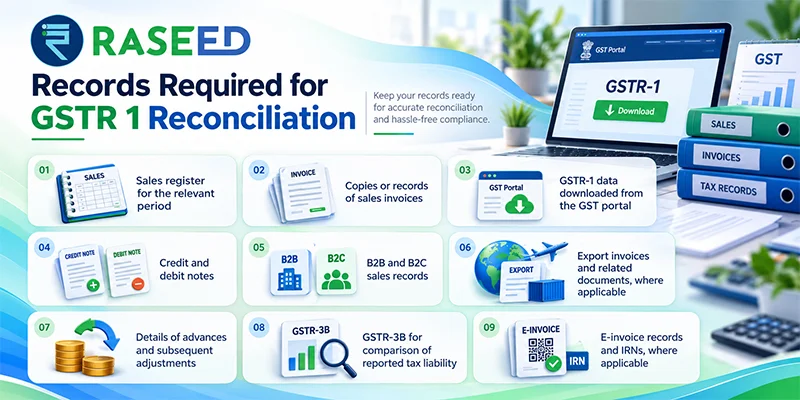
Good reconciliation starts with complete records. Depending on the business, these may include:
- Sales register for the relevant period
- Copies or records of sales invoices
- GSTR-1 data downloaded from the GST portal
- Credit and debit notes
- B2B and B2C sales records
- Export invoices and related documents, where applicable
- Details of advances and subsequent adjustments
- GSTR-3B for comparison of reported tax liability
- E-invoice records and IRNs, where applicable
The exact records required can vary based on the nature of the business and its transactions.
Simple Practices for Better GSTR 1 Reconciliation
Make GSTR 1 Reconciliation Easier with Raseed
Keep Your GST Sales Records Ready for Every Filing
GSTR 1 reconciliation does not have to be a year-end exercise. Checking sales data regularly gives businesses more opportunities to find missing invoices, duplicate entries, and other differences while the transactions are still easy to trace.

With accurate records and a consistent reconciliation process, businesses can keep their GST reporting more organized and deal with discrepancies before they become larger compliance issues.
GST Billing & Invoicing Software
Category List
Transform your billing with our top-notch software. Fast, accurate invoicing—start optimizing today!
